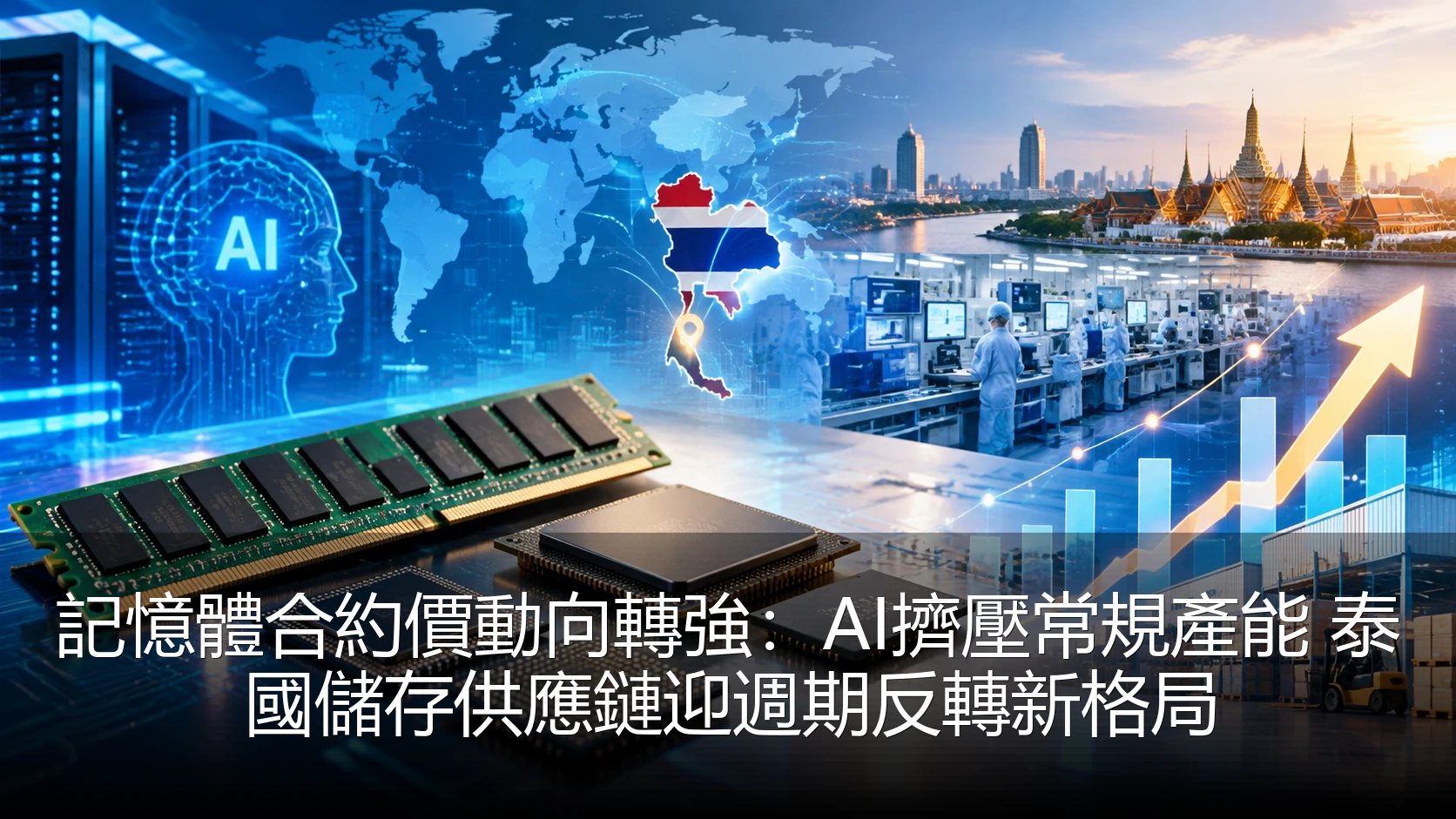
Southeast Asia Chip Price Index Q3 Strong Rebound: Thailand Semiconductor Market Sees Recovery Opportunity
In Q3 2026, the Southeast Asia Chip Price Index showed a remarkable strong rebound, marking the global semiconductor market's transition from inventory adjustment to recovery and bringing unprecedented opportunities to Thailand's semiconductor industry. Latest market data shows the index rose 12.5% in Q3 from the previous quarter, with Thailand's market up 15.3%, far exceeding the regional average. This significant change is driven by the dual forces of AI technology boom and automotive electronics demand, bringing new growth momentum to Thailand's semiconductor supply chain.
Market Dynamics Behind the Southeast Asia Chip Price Index Rebound
As a barometer of the regional semiconductor market, the Southeast Asia Chip Price Index directly reflects the prosperity of the entire Asia-Pacific semiconductor industry. The strong Q3 2026 rebound was mainly driven by two core factors: the explosive demand for computing power from rapid AI technology development, and the continuous expansion of the global automotive electronics market. These two factors jointly pushed up semiconductor product prices, especially in the high-end chip segment.
In the AI field, the advancement of large language models and machine learning algorithms has led to exponential growth in demand for high-performance computing chips. Southeast Asia, especially Thailand,凭借其成熟的封測產業鏈和相對優惠的製造成本, has become a key choice for global semiconductor suppliers. Many international chip design companies have shifted advanced packaging operations to Thailand, boosting local packaging capacity utilization and driving up prices of related chip products.
Meanwhile, the rapid growth of the automotive semiconductor market has provided strong support for the Southeast Asia Chip Price Index. As electric and smart vehicles become more prevalent, demand for automotive chips continues to rise. As the automotive manufacturing hub of ASEAN, Thailand's semiconductor supply chain is actively responding to this trend, with automotive chip prices showing a clear upward trend in Q3, further pulling up the overall chip price index.
Analysis of Thailand's Semiconductor Market Recovery Momentum
Thailand's semiconductor market outperformed the regional average in Q3, thanks to multiple factors. First, Thailand's government has continuously optimized investment policies, creating a favorable environment for semiconductor industry development. The BOI (Board of Investment) recently launched a hundred-billion-baht investment plan focusing on key areas like advanced packaging and SiC (silicon carbide), attracting significant international capital into Thailand's semiconductor market.
Second, the completeness of Thailand's semiconductor industry chain provides a solid foundation for market recovery. From wafer manufacturing to packaging and testing, Thailand has formed a relatively complete semiconductor industry system. Especially in packaging, Thailand has become a major global packaging base with its technical maturity and cost advantages. During Q3, Thailand's packaging capacity utilization exceeded 90%, reaching a recent high, directly driving up local chip product prices.
Additionally, the ASEAN supply chain shift effect has brought new opportunities to Thailand's semiconductor market. As global supply chain restructuring progresses, more international companies are relocating production bases to Southeast Asia, and Thailand,凭借其地理位置優勢和產業基礎, has become a key destination for this shift. The spillover effect of demand for advanced chips like HBM (High Bandwidth Memory) has brought Thailand's semiconductor companies numerous orders, further driving market recovery.
Market Trends Driven by AI and Automotive Chips
The rapid development of AI technology is one of the core drivers pushing up the Southeast Asia Chip Price Index. As AI applications expand from cloud servers to edge devices, demand for high-performance computing chips is growing explosively. This demand not only drives up prices of specialized chips like GPUs and ASICs but also boosts the recovery of the entire semiconductor supply chain.
In Thailand's market, AI chip demand growth is particularly evident. Many international AI chip design companies have partnered with Thai packaging manufacturers for advanced packaging and testing. This collaboration not only enhances Thailand's semiconductor industry technical level but also brings substantial revenue to local companies. During Q3, prices of Thailand's AI-related chip products rose 18.7%, far exceeding the overall chip price index increase.
The rapid growth of the automotive chip market is another key driver. As electric and smart vehicles become more popular, demand for automotive chips continues to rise. As ASEAN's automotive manufacturing center, Thailand's semiconductor supply chain is actively responding to this trend. From power semiconductors to automotive MCUs, Thai companies are expanding production capacity in the automotive chip sector, and product prices are rising accordingly. During Q3, Thailand's automotive chip prices rose 14.2%, making a significant contribution to the overall chip price index increase.
Semiconductor Inventory Adjustment Nearing End, Market Recovery Momentum Expected
The global semiconductor inventory adjustment is nearing its end, providing a solid foundation for market recovery. Over the past two years, affected by the pandemic, the global semiconductor supply chain experienced severe fluctuations, leading to significant inventory level swings. However, as the supply chain gradually stabilizes and demand structures adjust, inventory levels have returned to healthy ranges.
In Thailand's market, inventory adjustment progress is particularly notable. Thai semiconductor companies have successfully controlled inventory levels within reasonable ranges through optimized production planning and supply chain management. This not only reduces operational risks for enterprises but also creates conditions for market recovery. During Q3, Thailand's semiconductor inventory turnover rate increased by 15%, indicating improved market supply-demand dynamics.
Experts believe that the completion of semiconductor inventory adjustment will provide sustained momentum for market recovery. As inventory levels normalize, companies will be able to respond more flexibly to market demand changes, further driving industrial growth. Especially in the AI and automotive chip sectors, the completion of inventory adjustment will accelerate the recovery of the industry chain.
Investment Opportunities and Challenges in Thailand's Semiconductor Market
The strong rebound in the Southeast Asia Chip Price Index has brought new investment opportunities to Thailand's semiconductor sector. First, the profit margin from price increases provides financial support for enterprises to expand production and upgrade technology. Many Thai semiconductor companies plan to leverage the current market opportunity to expand production scale, enhance technical levels, and further consolidate their market position.
Second, the influx of international capital provides new impetus for Thailand's semiconductor industry development. As the Southeast Asia Chip Price Index rises, more international investors are paying attention to Thailand's semiconductor market. The BOI's hundred-billion-baht investment plan has attracted significant international capital, especially in key areas like advanced packaging and SiC, where international companies are increasing their investment.
However, Thailand's semiconductor market also faces some challenges. First is the talent shortage. As the industry develops rapidly, demand for high-quality semiconductor talent is growing, while local talent supply is insufficient, which could become a bottleneck for industry development. Second, the pressure of technological upgrading cannot be ignored. Only by continuously improving technical levels can one maintain an advantage in fierce international competition.
Future Outlook: Prospects and Challenges of Thailand's Semiconductor Market
Looking ahead, Thailand's semiconductor market is expected to maintain strong growth momentum. First, demand for AI and automotive chips will continue to grow, providing stable demand support for the market. Second, the ASEAN supply chain shift effect will further deepen, and Thailand,凭借其產業基礎和地理位置優勢, is expected to become an important node in the global semiconductor supply chain.
However, Thailand's semiconductor industry also needs to address some challenges. First is the pressure of technological upgrading. As semiconductor technology advances, Thai companies need to continuously invest in R&D and improve technical levels to maintain competitiveness. Second is the challenge of talent cultivation. Thailand needs to strengthen international cooperation to train more high-quality semiconductor talent to meet industry development needs.
Overall, the strong Q3 rebound in the Southeast Asia Chip Price Index has brought a recovery opportunity to Thailand's semiconductor market. Driven by dual forces of AI and automotive chips, Thailand's semiconductor industry is expected to enter a new development stage. For investors, this is an important opportunity to seize the golden age of semiconductors. However, it is also necessary to fully recognize the challenges in the market and implement risk management to achieve long-term returns in this industry cycle.