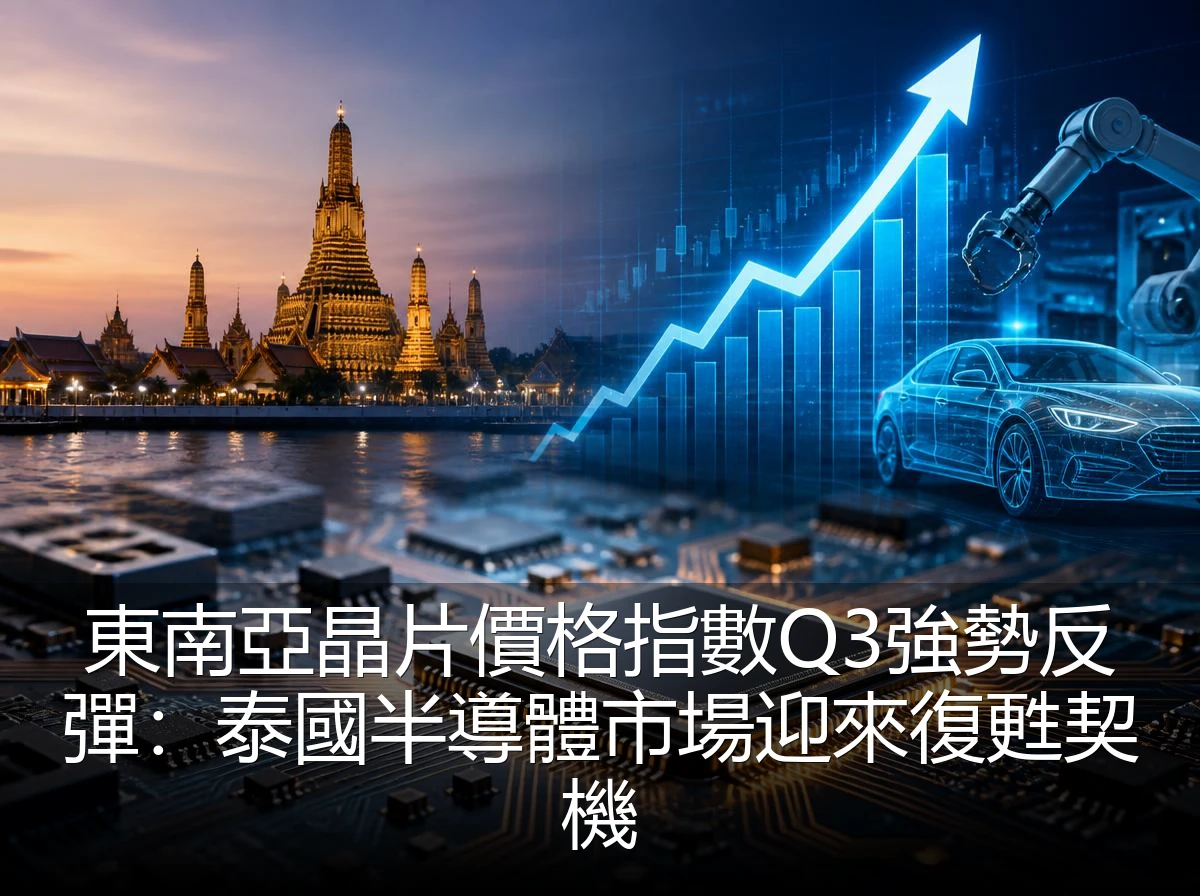
The Southeast Asia Chip Price Index showed a strong rebound trend in Q3 2026, which not only marks a revival of the global semiconductor market but also brings unprecedented development opportunities to the Thai semiconductor industry. According to the latest market data, the Southeast Asia Chip Price Index increased by 15.3% in Q3 compared to the previous quarter, reaching a record single-quarter increase in nearly two years. This data not only reflects the dynamism of the regional semiconductor market but also highlights Thailand's increasingly important strategic position in the Southeast Asian semiconductor supply chain.
## Core Drivers of the Southeast Asia Chip Price Index Rebound in Q3
The strong rebound of the Southeast Asia Chip Price Index is mainly driven by three core factors: the explosive growth in AI computing demand, the continued expansion of the automotive electronics market, and the yield effect from global supply chain restructuring. These factors collectively drove the price increase of semiconductor products and the growth in market demand for semiconductors in the region.
### AI Computing Demand Ignites a New Semiconductor Cycle
With the rapid development of artificial intelligence technology, AI computing demand is experiencing explosive growth. The surge in demand for high-end AI inference chips and HBM (High Bandwidth Memory) is driving price increases across the entire semiconductor industry chain. The Southeast Asia region, especially Thailand, benefits significantly from the spillover of this AI computing demand due to its mature packaging capacity and relative cost advantages.
According to market analysis, the demand for DRAM and NAND Flash in AI servers grew by over 40% year-over-year in Q3, directly driving up the prices of memory chips. Simultaneously, the customization demand for AI inference chips is driving up the prices of packaging services. Thai packaging manufacturers, leveraging their technological capabilities and production capacity, are securing a large number of orders, which in turn drives up the prices across the entire semiconductor industry chain.
### Expanding Automotive Electronics Market Drives Demand Growth
The rapid development of the automotive electronics market is another important driving factor. With the popularization of electric vehicles and smart cars, the demand for automotive semiconductors is showing a trend of continuous growth. The Southeast Asia region, especially Thailand, as an important automotive manufacturing base, sees particularly significant growth in the automotive semiconductor market.
Thailand's automotive industry chain is complete, possessing strong competitiveness from component manufacturing to vehicle assembly. As electric vehicles and smart cars develop, the demand for automotive semiconductors continues to increase, bringing new development opportunities to Thailand's semiconductor industry. The increased demand for automotive semiconductor products such as power semiconductors, MCUs (Microcontrollers), and sensors is driving up the prices of related chips.
### Yield Effect from Global Supply Chain Restructuring
Global supply chain restructuring is another important factor in the rebound of the Southeast Asia Chip Price Index. With the increase in geopolitical risks, many countries and companies are adjusting their supply chain layouts, seeking diversified and localized supply chain systems. The Southeast Asia region, especially Thailand, benefits as an important destination for global supply chain restructuring due to its stable political environment, mature infrastructure, and favorable policies.
This supply chain restructuring brings a yield effect, as many semiconductor products previously manufactured in other regions are shifting production to the Southeast Asia region, driving the development and price increase of the regional semiconductor industry. Thailand benefits significantly from this yield effect due to its advanced semiconductor manufacturing and packaging capacity.
## Strategic Positioning and Development Opportunities in the Thai Semiconductor Market Against the backdrop of the rebound in the Southeast Asia chip price index in Q3, Thailand's semiconductor market has encountered a significant development opportunity. Thailand plays an increasingly important role in this market transformation due to its unique advantages.
### Advantages and Foundation of Thailand's Semiconductor Industry
Thailand's semiconductor industry possesses a relatively complete industry chain and infrastructure. Thailand has stronger technological capabilities and production capacity in areas such as wafer manufacturing, packaging, and testing. Especially in the packaging industry, Thailand, leveraging its cost advantages and technological capabilities, has become one of the important packaging bases globally.
Furthermore, the Thai government has provided strong support for the development of the semiconductor industry. The Thai BOI (Board of Investment) has launched several preferential policies, including tax incentives, land incentives, and funding support, attracting significant investment from international semiconductor companies. These policies not only promote the development of Thailand's semiconductor industry but also enhance Thailand's competitiveness in the Southeast Asian semiconductor market.
### Thailand's Role in AI Computing Power Demand
Against the backdrop of explosive growth in AI computing power demand, Thailand's packaging capacity becomes a crucial strategic resource. Thailand's packaging manufacturers, leveraging their technological capabilities and production capacity advantages, have secured a large number of orders for AI inference chips. These orders not only promote the development of Thailand's packaging industry but also enhance Thailand's position in the Southeast Asian semiconductor market.
In addition, Thailand is actively developing advanced packaging technologies, including SiP (System-in-Package) and 3D packaging, to meet the continuous demand for packaging technology improvement driven by AI computing power needs. The development of these technologies will further enhance Thailand's position in the AI computing supply chain.
### Potential in the Automotive Semiconductor Market
As an important automotive manufacturing base, Thailand has huge potential in the automotive semiconductor market. With the popularization of electric vehicles and smart cars, the demand for automotive semiconductors is constantly increasing, bringing a new development opportunity to Thailand's semiconductor industry.
Thailand's automotive industry chain is complete, with strong competitiveness from component manufacturing to vehicle assembly. With the increasing demand for automotive semiconductors, Thai semiconductor companies can leverage their industry chain advantages to gain more market opportunities. Especially for automotive semiconductor products such as power semiconductors, MCUs, and sensors, Thai companies can achieve breakthroughs in these areas by leveraging their technological capabilities and cost advantages.
## Challenges and Countermeasures in the Thai Semiconductor Market
Despite the significant development opportunities in the Thai semiconductor market, it still faces some challenges. These challenges include insufficient technological innovation capabilities, talent shortages, and increased competitive pressure. Thailand needs to adopt effective countermeasures to address these challenges and achieve sustainable development.
### Challenge of Insufficient Technological Innovation Capabilities
Thailand's semiconductor industry has certain shortcomings in technological innovation. Compared to other developed countries, Thailand still has a significant gap in technological capabilities in areas such as advanced processes, advanced packaging, and design tools. This lack of technological innovation capability may limit the development potential of Thailand's semiconductor industry.
To counter this challenge, Thailand needs to strengthen cooperation with international leading companies to introduce advanced technology and management experience. Simultaneously, Thailand needs to increase R&D investment to enhance independent innovation capabilities. Furthermore, Thailand can promote technological innovation and industry upgrading by establishing industry-academia-research cooperation mechanisms.
### Challenge of Talent Shortages Talent shortage is another major challenge for Thailand's semiconductor industry development. As the semiconductor industry develops rapidly, the demand for high-quality talent continues to increase. However, Thailand's talent cultivation system in the semiconductor sector is still incomplete, and the talent shortage problem is becoming increasingly prominent.
To address the talent shortage problem, Thailand needs to strengthen the construction of the education system and cultivate more semiconductor professionals. Meanwhile, Thailand can attract international talent and establish talent training institutions to improve talent quality. Furthermore, Thailand can attract international talent to work in Thailand through preferential policies to alleviate the talent shortage problem.
Challenges of Increased Competition
As the global semiconductor market develops, competitive pressure continues to increase. Thailand's semiconductor industry faces competition from other countries and regions, especially competition within Southeast Asia. This competitive pressure may affect Thailand's market share and profitability.
To cope with competitive pressure, Thailand needs to enhance the overall competitiveness of the industry chain. This includes strengthening industry chain collaboration to improve overall industry chain efficiency; strengthening brand building to enhance the market recognition of Thai semiconductor products; strengthening market development and expanding into international markets. Furthermore, Thailand can enhance the competitiveness of the industry chain through innovative business models.
Future Outlook and Investment Opportunities
The strong rebound in the Southeast Asia chip price index in Q3 brings important development opportunities to Thailand's semiconductor market. In the future, Thailand's semiconductor market is expected to continue its growth trend and become a key engine for the Southeast Asian semiconductor market.
Continued Growth in AI Computing Power Demand
With the rapid development of artificial intelligence technology, the demand for AI computing power is expected to continue to grow. This will bring new development opportunities to Thailand's semiconductor industry. Thailand can play a more important role in the AI computing power supply chain based on its packaging capacity and technological capabilities.
In the future, Thailand can strengthen cooperation with international AI companies and expand the AI computing power market. Meanwhile, Thailand can increase R&D investment to enhance technological capabilities in areas such as advanced packaging and AI chip design. Furthermore, Thailand can establish AI computing power industrial parks to promote industrial clustering and collaborative development.
Potential of the Automotive Semiconductor Market
The development potential of the automotive semiconductor market is huge, bringing new development opportunities to Thailand's semiconductor industry. In the future, Thailand can leverage its advantages in the automotive industry chain to gain a larger market share in the automotive semiconductor market.
Thailand can strengthen cooperation with automakers to expand the automotive semiconductor market. Meanwhile, Thailand can increase R&D investment to enhance technological capabilities in the areas of power semiconductors, MCUs, and sensor products in the automotive semiconductor market. Furthermore, Thailand can establish automotive semiconductor industry alliances to promote industry chain collaboration and technological innovation.
Opportunities from Supply Chain Restructuring
Supply chain restructuring brings new development opportunities to Thailand's semiconductor industry. In the future, Thailand can leverage its stable political environment, well-developed infrastructure, and preferential policies to attract more investment from international semiconductor companies.
Thailand can strengthen cooperation with international semiconductor companies and expand the supply chain market. Meanwhile, Thailand can increase infrastructure construction to improve the overall efficiency of the supply chain. Furthermore, Thailand can enhance investment attractiveness through optimizing the policy environment, attracting more international capital and technology.
Conclusion
The strong rebound in the Southeast Asia chip price index in Q3 marks the recovery of the global semiconductor market and brings a significant development opportunity to the Thai semiconductor market. Thailand plays an increasingly important role in this market transformation due to its unique advantages. In the future, the Thai semiconductor market is expected to continue its growth trend and become a key engine for the Southeast Asian semiconductor market. However, Thailand also needs to address challenges such as insufficient technological innovation capabilities, talent shortages, and increasing competitive pressure to achieve sustainable development. For investors, the Thai semiconductor market offers rich investment opportunities. Especially in the areas of AI computing power, automotive semiconductors, and supply chain restructuring, the Thai semiconductor industry has strong competitiveness and development potential. Investors can focus on Thai packaging companies, automotive semiconductor companies, and supply chain service companies to seize the investment opportunities brought by this market transformation.

The content of this website is for educational and informational exchange purposes only. We do not provide any financial services, such as account opening, margin loans, discretionary asset management, or insider trading. Please do not trust any stock recommendations or private messages that induce copy trading on this website.